

How can a foreigner ride a scooter in Bali?
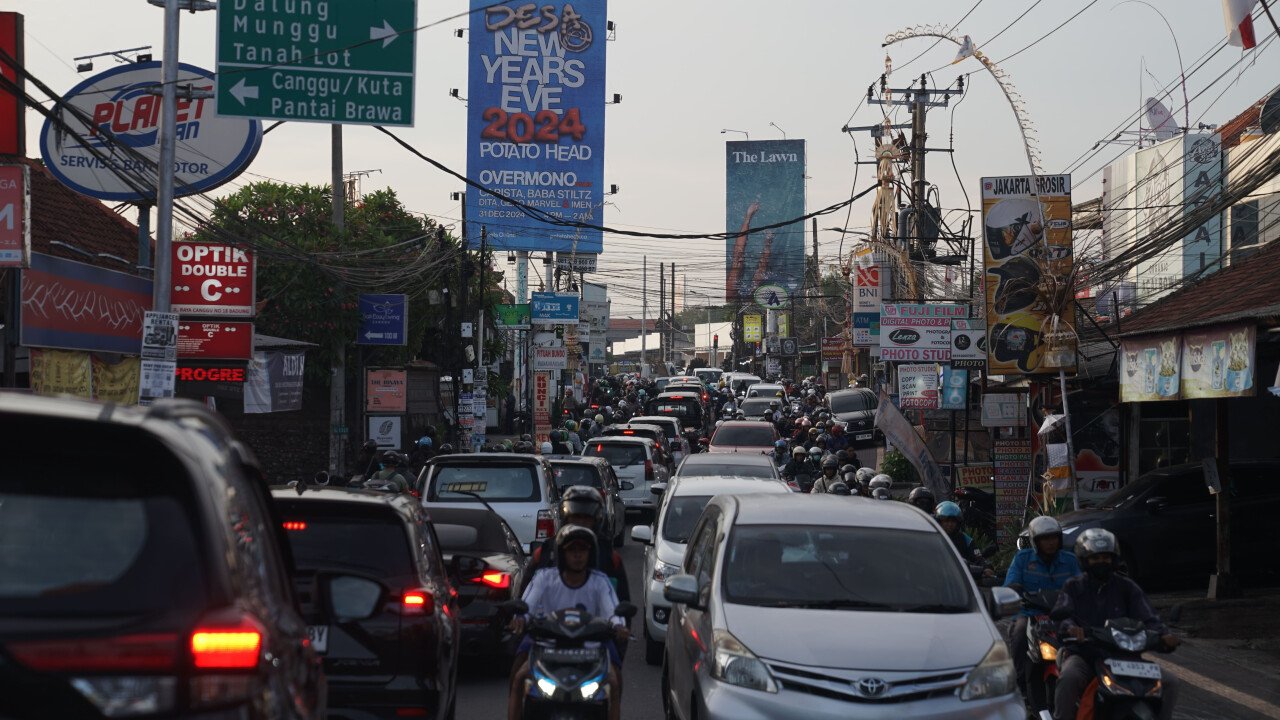
So, you’ve decided to rent a motorbike — on Bali, that usually means a scooter. You’re ready for the adventure, but the island’s traffic looks a bit chaotic at first glance? Fair enough. The good news is that the basic road rules still apply here. You just need to understand a few local habits that are typical for Indonesia, and Bali in particular. This guide will help you feel more confident, safer, and far more comfortable on the road.
The first and most important tip: if you have never ridden a scooter before, take lessons at a good riding school. It is much better to practice proper technique in protective gear on a safe training ground than to test your luck on a busy public road.

You also need the right driving licence. It should be either an international driving permit or a licence issued by an ASEAN country. And make sure it covers the correct category. A car licence does not allow you to ride a scooter or motorbike. If the police stop you without the proper documents, the conversation may end badly.
Choose a bike that matches your size, your riding plans, and your level of experience. Beginners usually feel much more comfortable on a smaller scooter. Models like the NMax, PCX, and especially the XMax are better once you already feel confident handling lighter bikes first. If you are wondering which is the most reliable scooter rental in Bali, pick the model that suits your experience best.
When you start moving, open the throttle slowly. You do not want the bike to suddenly shoot forward like a rocket. At low speeds, especially in traffic jams or parking areas, try not to walk the scooter forward with your feet on the ground for too long. Put your feet on the footrests as early as you can — the bike will feel more stable.
Even after reading all these tips, take it easy during your first days on the road. You need time to get used to the rhythm of Bali traffic. Skip long rides at first. Short practice trips are a much better idea.
If you have only just started riding, carrying a passenger is not the best plan. An inexperienced passenger can shift their weight unexpectedly while turning or filtering through traffic, and that can easily upset the balance of the scooter. For a new rider, that is one complication too many.
After two or three days on a scooter, many people suddenly feel like they have mastered everything, can read the road perfectly, and that anything under 100 km/h is boring. That feeling is deceptive. Do not trust it too much. Ride carefully.

Learn to read the traffic. In Bali, this matters a lot. Most riders are actually quite predictable if you watch closely. Do not focus only on the bike directly in front of you — look several scooters ahead. That gives you more time to anticipate what everyone around you is about to do.
Local scooter riders rarely use turn signals when changing lanes, so you often have to guess what they might do next and stay ready for it. Keep your distance. And do not ride directly in the same track as the bike ahead of you. It is usually safer to stay slightly to the left or right of its rear wheel.
You will probably hear more honking in Bali than you are used to back home. Usually, it is not aggressive. It simply means, “I’m here, be careful.”
Try not to ride too close to the shoulder of the road. Too many surprises come from there. A dog can run out. A drunk tourist can step into traffic. Sometimes another scooter appears from the wrong direction. Yes, riding against traffic is illegal in Indonesia, but that does not mean it never happens. Another local habit: some drivers will pull out right in front of you without really looking. Staying away from the edge of the road helps you avoid a lot of this.
Intersections without traffic lights can be especially tricky. The unofficial rule often feels like this: the bolder driver goes first. Be extra careful and stay alert.
In traffic jams, do not copy locals who sometimes overtake on the wrong side of the road. It can leave you stuck with no way back into your lane while something large — for example, a bus — is coming straight toward you.
Riding at night requires more attention. On poorly lit roads, it is easy to miss a pothole or even a truck parked by the roadside. Keep your speed down and use high beam where it will not disturb oncoming traffic.
When it rains, remember that the road becomes much more slippery. Use the throttle smoothly. Brake even more gently. And do not charge into puddles at speed. They may be deeper than they look, and there is always the risk of aquaplaning, which can send you straight to the ground.
If a parking attendant asks you for money, just pay. That is normal here. The same goes for access fees at many beaches.
A good helmet can get stolen. If you do not want to lose it, take it with you, hide it in the storage compartment, or secure it with the special hook under the seat. Riding without a helmet is never a good idea. Take care of your head.
If you get into an accident or any kind of road conflict, stay calm when discussing the problem. Politeness usually works better than pressure. In traffic disputes, a foreigner is often treated as being at fault by default, so be prepared that you may have to pay the other side even if you do not believe you caused the incident.
Smooth roads ahead.
And in our blog, you can also find the best Bali scooter routes for your next ride.
1-day Bali Itinerary from Ubud
https://balimotion.pro/en/blog/marsrut-po-bali-na-1-den-iz-ubuda
Motorcycle Route for 1 day to the Cotton Tree an Butterfly Park
https://balimotion.pro/en/blog/motomarsrut-na-1-den-k-hlopkovomu-i-derevu-i-parku-babocek-2
Village of dead& One day motorcycle route
https://balimotion.pro/en/blog/village-of-the-dead-one-day-motorcycle-route


